
Japanese hospitality is not limited to welcoming; It is a true art of attention, detail and empathy. In Japan, the concept of omotenashi It traverses everyday life, from a tea ceremony to a simple visit to a shop. In this article, we’ll explore what omotenashi is, where it comes from, how it’s expressed in modern life, and why it’s a perfect gateway to understanding the Japanese language and culture.
What is Omotenashi and what is its true meaning?
The word omotenashi (おもてなし) It is often translated as “hospitality,” but its meaning is much deeper. Linguistically, it is composed of the honorific prefix o-, + motenashi, which derives from motenasu (もてなす), “to attend, to receive with care.” Some sources interpret it as “hospitality without a façade” or “hospitality without reservations”.
The key value of the omotenashi is mindfulness of the other: anticipating their needs, taking care of details, acting sincerely and without expecting anything in return. It is a service that transcends the transaction: it is not just about “customer vs supplier”, but “guest vs host” where the well-being of the other is prioritized.
Do you want to discover the spirit of Omotenashi without leaving home?
With Doki FLIX, learn Japanese online while exploring the culture, values, and traditions that make Japanese hospitality unique. Live classes, cultural workshops and much more.
The Cultural Origin of Omotenashi in Japan
The Influence of Tea and Ancient Traditions
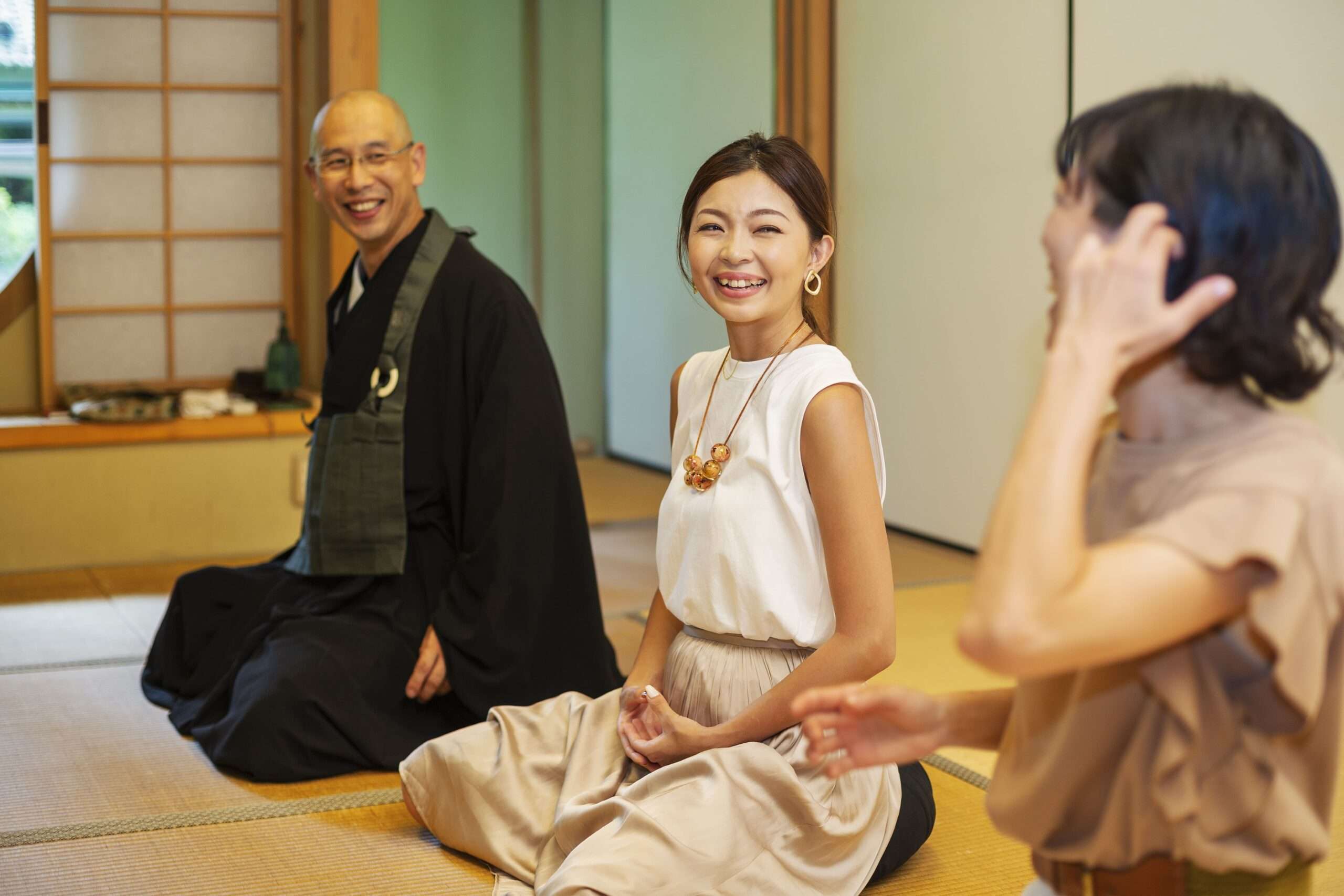
One of the most cited roots of omotenashi is the tea ceremony, or Chanoyu (茶の湯), in which every gesture, utensil, flower, container, even the cleaning of the tatami, is performed with the guest in mind. In that context, the host not only shows courtesy, but also makes the experience memorable: every piece and every pause makes sense.
The importance of respect and attention to detail
In traditional Japanese culture, harmony (和, wa), respect for others, cleanliness, order and measured gestures. The omotenashi captures these values: silent attention, empathetic attitudes, complying without being asked. A practice that has been common for centuries and has evolved over time but maintains its essence: “take care of the other as you would like to be cared for”.
How Omotenashi is lived in everyday life
Examples of Omotenashi in Japanese Society
You will find examples of omotenashi in the punctuality of the transports, in the smile of the clerk who welcomes you without using your name, in the taxi that helps you without asking you. Also when a store impeccably wraps your purchase or a hotel prepares your arrival without any announcement: invisible but perceptible details.
The role of hospitality in shops, hotels and schools
In traditional hotels (ryokan), in quality restaurants or in neighborhood shops, omotenashi is part of the service. For example, the staff can accompany your arrival with their eyes, help you put away your umbrella before you ask for it, look after your comfort. In schools or neighbourhood relationships it is also noticeable: a mother serves tea to the visitor, the neighbour picks up your parcel without you finding out, etc.
Differences with Western customer service
Unlike Western hospitality (which may be more tied to commercial exchange, to the “customer comes first”), omotenashi emphasizes the absence of expectations of reward, sincerity, and anticipation of the other. It is not just a matter of “delivering a service”, but of “welcoming the other as a guest”. That subtlety changes the experience.
Omotenashi in the Modern World
Its impact on tourism and the Olympic Games
The term omotenashi gained international visibility when the Japanese style of hospitality was discussed within the framework of the Tokyo 2020 Olympic Games, as a cultural seal that Japan wanted to show the world. In tourism, this value has become a differentiating argument: experiences that surprise with their warmth without being flashy.
How it adapts to new generations
Although the origin of omotenashi is in traditions, new generations reinterpret it in modern environments: booking apps that include personalized greetings, capsule hotels with automated welcome details, cafeterias that adjust the light or music when you enter. The spirit remains the same: to surprise the guest with sincere attention.
The value of Omotenashi in Japanese language learning
Expressions and gestures of courtesy in Japanese
Omotenashi also manifests itself in language and gestures. Phrases like いらっしゃいませ (Irasshaimase) when entering a shop, polite bow when greeting, use of “お客様” (okyakusama, customer/guest) instead of “customer”. To learn these expressions is to learn the culture behind it. Also, knowing when to use “恐縮です” ( kyōshuku desu) or “ありがとうございます” with different intensity reflects the cultural sensitivity of omotenashi.
Empathy as the basis of the Japanese language
In Japanese, the effort to put oneself in the other’s shoes (思いやり, omoiyari) and read the situation (気配り, kikubari). These values are at the basis of omotenashi. Learning Japanese allows you to grasp these subtleties: not only do you translate words, but you also make conscious of “being aware of the other without them saying it”. For you as a Japanese learner, incorporating this way of thinking opens doors to the language, culture, and deeper relationships.
Live the spirit of Omotenashi with Doki Doki Japan
At Doki Doki Japan We believe that learning Japanese is not only about studying vocabulary or grammar, but also about living the values behind it. We invite you to:
- Participate in our classes where we explore omotenashi from its cultural roots.
- Access workshops where we practice real scenarios (guided tours, Japanese cafes) so that you can experience Japanese hospitality first-hand.
- Connect with students and natives who share the vision of learning based on empathy and culture.

Co-founder and Director of Doki Doki Japan. After learning Japanese and working in Japan for two years, he decided to turn his passion for teaching into a vision: to found his own online Japanese language school.