

Doki Blog
Your place to learn all about the Japanese language, culture, society, study in Japan, travel in Japan, and more!

How to Learn Kanji Without Memorizing 2,000 at Once
When you start learning Japanese, hiragana and katakana feel like a reasonable challenge. Then you find out that there are thousands of kanji, and the inevitable question shows up: do you really have to memorize more than 2,000 characters to read Japanese? You don't...
How to Pass the JLPT N1: A Complete Study Guide
Reaching the JLPT N1 means taking on the highest level of the Japanese-Language Proficiency Test. Piling up grammar points and kanji is no longer enough: you need to understand complex texts, follow Japanese at natural speed and pick up nuances that could go unnoticed...

How long does it really take to learn Japanese?
If you’re just starting out, you probably want a specific figure: six months, two years, five. The problem is that “learning Japanese” can mean completely different things. It doesn’t take the same amount of time for someone who wants to order food and get around...

How to Pass the JLPT N2: A Guide to Making the Leap from N3
Getting to JLPT N2 changes the way you study Japanese quite a bit. In previous levels you can still advance by relying heavily on lists, closed exercises and adapted texts. In N2, on the other hand, you begin to face Japanese that is closer to that which appears in...

Best apps for learning Japanese (and why they’re not enough on their own)
Find the best apps to learn Japanese It's often one of the first steps for any student. They're accessible, allow you to practice on your phone, and turn a few free minutes into a short study session. The problem arises when we expect a single app to take us from...

How to pass the JLPT N3
The JLPT N3 This marks one of the most significant changes in Japanese language learning. While levels N5 and N4 focus primarily on the foundations of the language, N3 requires students to begin understanding Japanese used in everyday situations at a speed and...

Working holiday in Japan: the visa that lets you live and work for a year
Spending an extended period in Japan, exploring different cities, and working to finance part of the experience is possible thanks to the Working Holiday Japan program.. This visa allows you to stay in the country for a maximum of one year and perform temporary work,...

How to Find a Job in Japan: Real Methods That Work for Foreigners
Working in Japan is the dream of many people who study the language or are fascinated by the country's culture. However, one of the most common questions is whether it is actually possible for a foreigner to find employment. The answer is yes. In fact, the number of...

Essential Japanese expressions: basic phrases and words for everyday life
When you start studying Japanese, it’s natural to wonder where to begin. Kanji? Grammar? Particles? Although all of that is important, there is something that will allow you to communicate from day one: learning a few basic Japanese words, along with the basic...

Is It Difficult to Learn Japanese? Tips for Overcoming It
One of the questions we hear most often at Doki Doki Japan is this: “Is it really difficult to learn Japanese?”. And the short answer is yes… but not in the way many people imagine. Japanese is a language very different from Spanish, and this makes everything seem...
Learning Japanese with anime? How to do it properly without getting stuck on the surface
Many people become interested in Japan thanks to anime. And yes, there are also many students who take their first steps in the language by trying Learn Japanese with anime. The good news is that anime can actually be incredibly helpful. The bad news is that if you...

Introducing yourself in Japanese without mistakes: a complete guide to making a good impression
Knowing how to give a good presentation in Japanese It's one of those small but significant steps that make all the difference when you start learning a language. Not only does it allow you to communicate from the very beginning, but in Japan, first impressions carry...
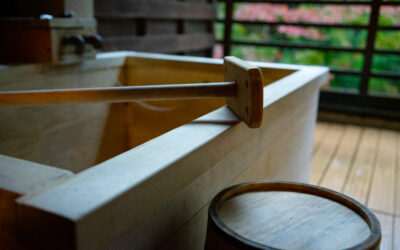
What is an onsen and why is it an almost sacred experience?
If you've ever seen pictures of Japan with mountains, steam rising from the water, and people relaxing in silence, you were probably looking at an onsen.. But what at first glance appears to be a hot bath is, in reality, one of the most authentic and profound...

Japanese Adverbs: Essential Uses to Improve Your Fluency and Comprehension
Japanese adverbs (副詞 fukushi)are essential words for enriching your language skills. Although at first glance they may seem like simple grammatical details, their correct use makes the difference between rigid sentences and natural, fluent Japanese. Adverbs provide...

Learn to Read Japanese with Manga: Have Fun While Practicing
Read manga to learn Japanese It's a great way to combine entertainment and real language study. Manga—Japanese comics—offers natural conversations, authentic vocabulary, and visual context that help students improve in fun and progressive ways. With the right...

What is J-pop? The musical phenomenon that does not stop growing
J-pop it's much more than "Japanese pop": it has become a massive cultural phenomenon that has transcended borders, influencing generations of fans inside and outside Japan. From its origins to its presence in anime, fashion, and youth culture, J-pop has evolved to...
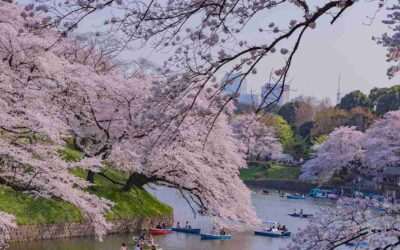
Traveling to Japan in spring: an unforgettable natural spectacle
Japan in spring is one of the most magical times of the year to visit the country. With mild temperatures, longer days and nature in full splendour, this season has a charm that is hard to match. It is especially famous for the cherry blossoms ( sakura), which...
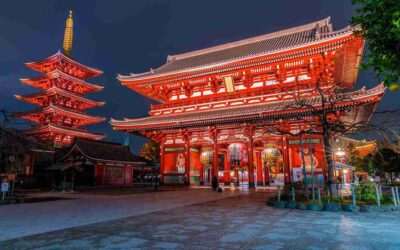
The Edo Period in Japan: An Age of Samurai, Art, and Isolation
The Edo period in Japan—also known as the Tokugawa era— It is one of the most fascinating historical periods in this country. It was an era in which Japan experienced inner peace, flourished culturally and isolated itself from the rest of the world for more than two...

Fun facts about Japan that will make you see the country with different eyes
Japan is a country that seems to be taken from another planet. Its blend of millennia-old tradition and futuristic modernity creates a culture so fascinating that it captivates anyone who visits or studies it. From implicit social norms to unique everyday phenomena,...
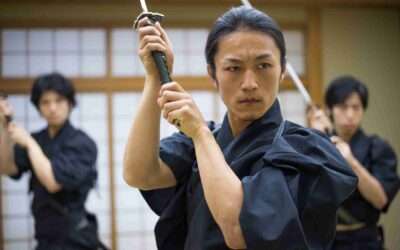
Bushido, the soul of the samurai that still guides many Japanese
The term Bushidō (武士道) literally translates to "the way of the warrior": bushi (warrior) + dō (road). It is not simply a set of rules of engagement, but an ethical, moral, and spiritual code that defined the life of the samurai—a complete lifestyle that ranged from...
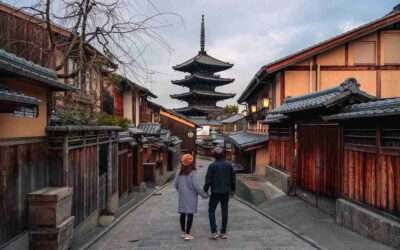
Kansai-ben: the dialect of western Japan that will surprise you
Among the many japanese dialects, the kansai dialect (Kansai-ben, 関西弁) is probably the most recognizable. Spoken across Osaka, Kyoto, Kobe and other Kansai prefectures, it carries a melodic intonation, distinct grammar and an expressive personality that sets it apart...
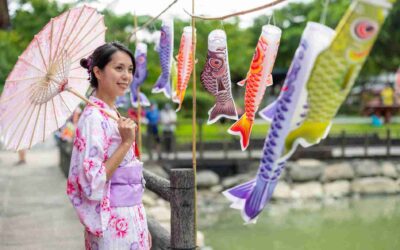
When the country stops: this is how Golden Week is lived in Japan
What is Golden Week in Japan? Golden Week is one of the most anticipated holiday seasons of the year: a string of national holidays that turns the entire country into a giant stage for rest, travel and celebration. In this guide we explain what Golden Week is, the...

Japanese Levels: What Each One Means and What Is Expected of You
The most widely recognized system for measuring Japanese proficiency is the Japanese Language Proficiency Test (JLPT), also known as "Noken." This exam has five levels ranging from the most basic to the most advanced: N5, N4, N3, N2 and N1. The N5 level...

Omotenashi: the Japanese art of hospitality
What is omotenashi? Japanese hospitality is not limited to welcoming a guest. It is a true art of attention, detail and empathy. The concept of omotenashi (おもてなし) runs through everyday life in Japan, from a tea ceremony to a simple visit to a shop. In this guide we...
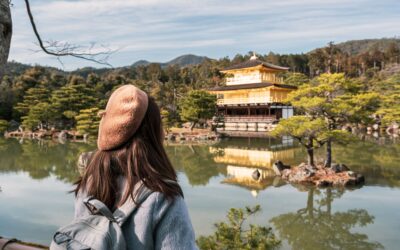
Essential requirements to go to Japan: visa, language, accommodation and more
Traveling to Japan or ordering a longer stay there (study, work, or life) is an exciting adventure... But it also requires planning. Know in advance the Requirements to go to Japan It will allow you to enjoy the experience without last-minute surprises. In this...
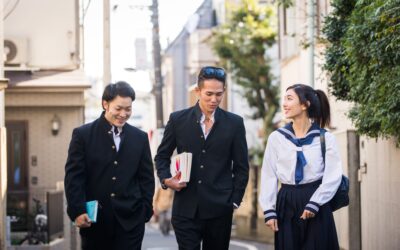
This is how Tokyo dresses: fashion in Japan that defies convention
Tokyo is a scene of contrasts where the ancestral coexists with the bold. The fashion in Japan She is not afraid to challenge expectations: she mixes tradition with urban aesthetics, classic garments with disruptive outfits, and creates styles that seem to come out of...

Aisatsu: Correct Japanese greetings according to the occasion
What is aisatsu? In Japan, greetings are not just a matter of courtesy. They are a manifestation of respect, hierarchy and social connection. In this guide we explain aisatsu, the Japanese greetings used for each moment of the day and situation, the gestures that...

Harajuku Fashion Guide: Tokyo’s Street Style Scene, Subcultures & Where to Shop
If you've ever wondered what Harajuku is, the answer is simple: it's much more than a Tokyo neighborhood. It is a place where fashion, art and youth culture explode in a thousand colors and shapes. Harajuku Tokyo has become a symbol of creative freedom, a space where...

Why does Japanese manga conquer all generations?
When we talk about Japanese manga, we are not talking about simple comics: it is a cultural phenomenon that has transcended borders, genres and ages. From children leafing through their first volume to adults collecting special editions, Japanese comics continue to...
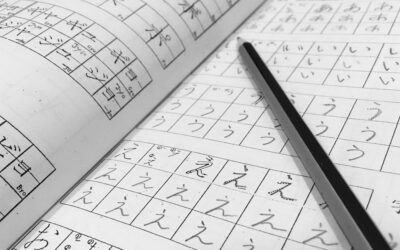
Japanese Alphabet Explained: Types and How to Master Them Quickly
Does Japanese have an alphabet? Not in the Western sense. The Japanese language alphabets are actually three coexisting writing systems: hiragana, katakana and kanji. Together they form what most learners call "the Japanese alphabet", and mastering how they interact...

